
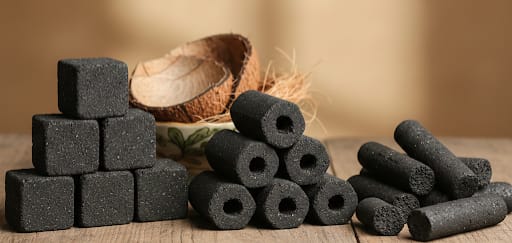
Choosing the best types of coconut shell charcoal briquettes for export is important for businesses targeting international markets. To understand the full classification and specifications, you can first explore the main guide, Types of coconut shell charcoal briquettes for export, which explains the standard categories used in global trade. Additional insights about product trends, sourcing, and online distribution can also be found through the homepage of zanteeshop.com, which provides useful references for exporters and buyers.
Coconut shell charcoal briquettes are widely exported because they offer stable heat, low ash content, and environmentally friendly characteristics. They are commonly used in shisha lounges, restaurants, and home grilling, making them a high-demand product in many countries. However, different markets require different briquette types depending on usage, packaging, and burning performance.
Cube Briquettes
Cube briquettes are among the most popular types for export, especially for shisha use. They are known for their long burning time, consistent heat output, and minimal smoke. Standard sizes such as 25 mm and 26 mm are commonly requested by international buyers. Their uniform shape also makes packaging and transportation more efficient.
Hexagonal Briquettes
Hexagonal briquettes are often used for barbecue and industrial purposes. Their shape allows better airflow, which supports stable combustion. This type is preferred in markets that prioritize grilling performance and longer cooking sessions. Exporters often supply hexagonal briquettes in bulk packaging for restaurants and distributors.
Finger Briquettes
Finger briquettes are slim and cylindrical, making them suitable for quick ignition and controlled heat. They are commonly used in smaller grilling setups or by consumers who prefer easy handling. Some importers choose this type because it is lightweight and practical for retail packaging.
Pillow-Shaped Briquettes
Pillow-shaped briquettes are designed for general grilling and household use. They ignite faster compared to cube briquettes and are often used in casual barbecue settings. This type is widely exported to regions where consumer grilling is popular, such as Europe and North America.
Custom-Shaped Briquettes
Many exporters now offer custom-shaped briquettes based on buyer requirements. These may include logo-shaped products, unique sizes, or specific density levels. Customization helps brands stand out in competitive markets and provides added value for long-term partnerships.
Quality Factors for Export
When selecting the best briquette types for export, quality standards must be considered. Key factors include fixed carbon content, ash level, moisture content, and burning duration. International buyers often require briquettes that produce stable heat with minimal residue.
Packaging is another important aspect. Export-ready briquettes are typically packed in durable cartons, inner plastic layers, and moisture-resistant materials. Clear labeling and product specifications also improve buyer confidence and simplify customs procedures.
Market Demand and Application
Different countries have different preferences when it comes to coconut shell charcoal briquettes. Middle Eastern markets often prioritize cube briquettes for shisha, while European markets demand barbecue-oriented shapes. Understanding these preferences helps exporters choose the right product type and marketing strategy.
In addition, sustainability has become a major selling point. Coconut shell briquettes are considered eco-friendly because they use agricultural waste and produce less smoke than traditional charcoal. This makes them attractive to environmentally conscious buyers.
Conclusion
The best types of coconut shell charcoal briquettes for export depend on market needs, product application, and quality standards. Cube, hexagonal, finger, pillow-shaped, and custom briquettes each serve different purposes and target audiences. By understanding these variations and preparing products that meet international expectations, exporters can increase competitiveness and build long-term relationships with global buyers.
